A Record of Renamed Mongolian Schools
By Soyonbo Borjigin
|
Author Bio Soyonbo Borjigin is a journalist and author from Southern Mongolia. His work focuses extensively on ethnic policies, language rights, and human-interest stories in China, offering critical insights into the region's socio-political shifts. |
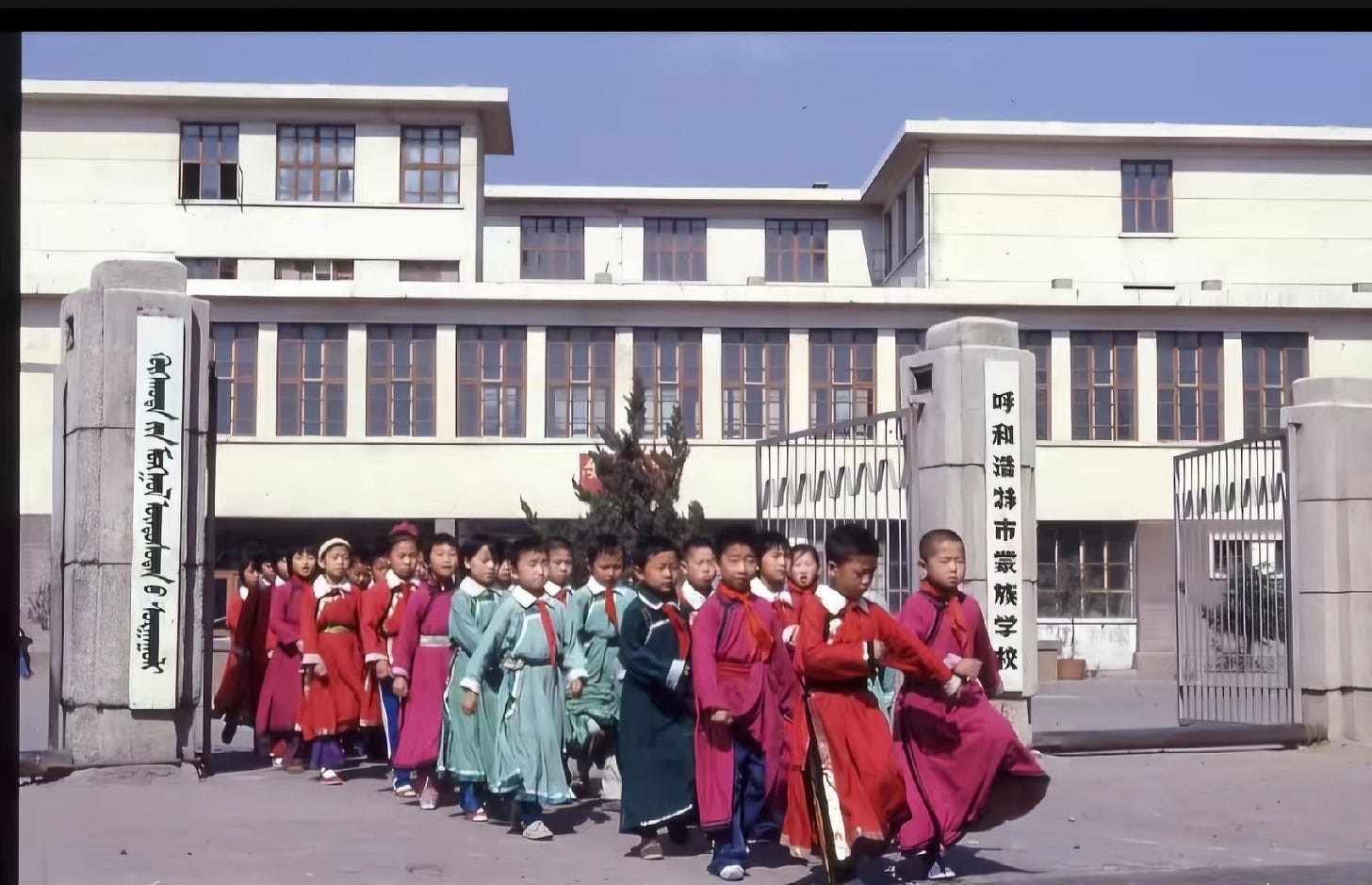 The school gate of Hohhot Mongolian School photographed in 1989.
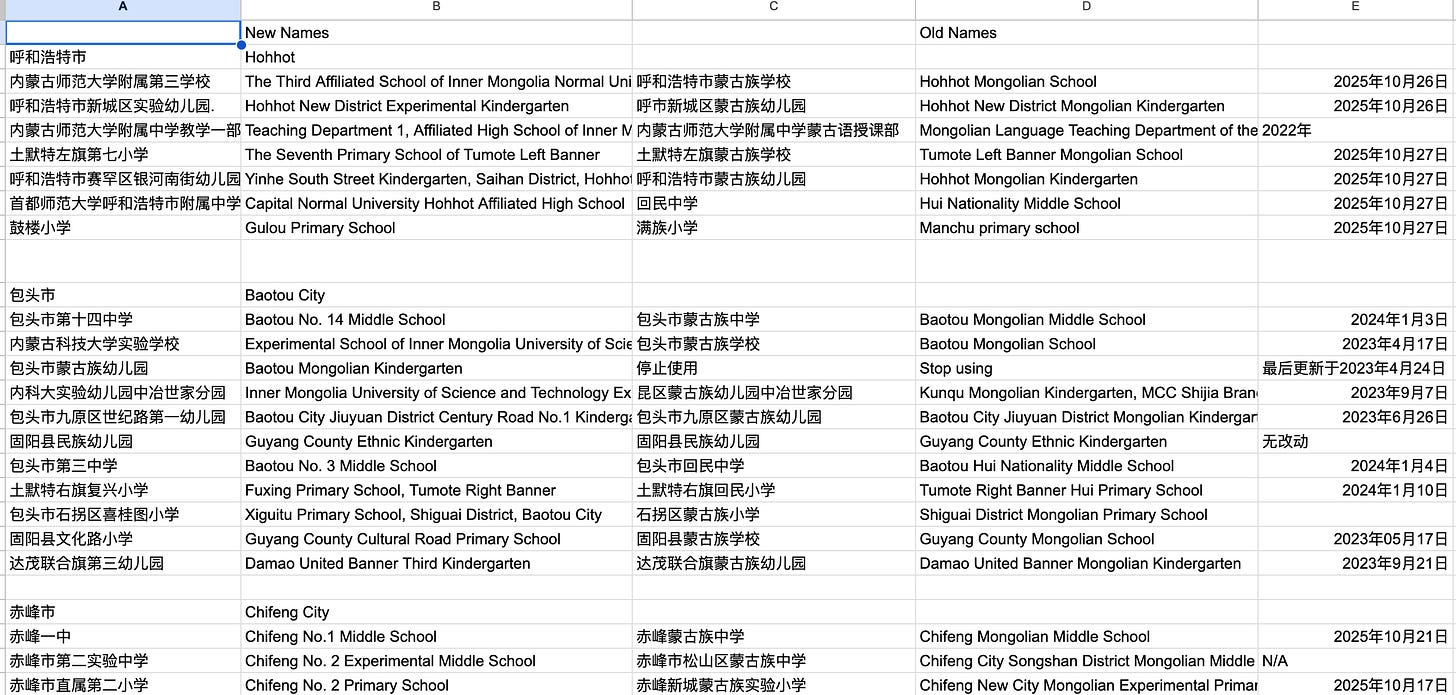 This image comes from a Google Sheet I compiled, documenting the name changes of Mongolian schools, showing their original names, new names, locations and the time of change.
-
What has been happening to Mongolian schools?
Since 2021, the names of many Mongolian schools across Inner Mongolia Autonomous Region have been gradually changed, with Mongolian schools name being replaced.
-
How were these changes carried out?
In most cases, the renaming process took place quietly, without explanation. Local communities often learned of the new names only after they had already been implemented.
-
How was this list compiled?
This list was created based on publicly availble information, local government notices and WeChat offical accounts. I explained the methodology in this article.
-
What patterns can be observed in these name changes?
A clear pattern emerges: the removal of the word “Mongolian”.
-
How does this relate to official statements?
China’s Ministry of Foreign Affairs has stated that “Mongolian-language education is fully protected“. However, the pattern we discovered suggests a different reality.
-
Why does this matter?
School names are not merely administrative labels. They carry memory, identity and cultural presence.
-
Does Mongolian-language education still exist?
No, it doesn’t exist anymore.
-
Where are the Mongolian teachers now?
There is no single answer to this question, as the situation is complicated. Some of them have been reassigned to teach in Chinese, as long as they passed the Chinese exam. Others have been transferred to non-teaching roles, such as security guards and dorm room supervisors.
-
Who decided these name changes?
The decision making process in China is rarely transparent to the public.
-
What happens when a school name changes?
Once a school is renamed, it is often no longer officially recognized as an “ethnic-language instruction school.“ Over time, it becomes increasingly difficult for future generations to find their linguistic roots.
Author’s Note
The list is an ongoing record based on available information. As further changes occur, it will be updated accordingly. The purpose of this documentation is to preserve a trace of what might otherwise quietly disappear.